
Considering clothes
An essay that is only a little bit ontological inquiry

One of my many personal flaws is that I’ve always been one to err on the side of being under- rather than over-dressed. While this does feel like an almost unquestionable part of myself at this point, it’s not one that I like.
I remember in middle school, we were having some sort of thespian ceremony, and while all the other girls brought their nice dresses to change into, I wore shorts for the ceremony. (If memory serves me correctly, I believe I was wearing these knee-length salmon coloured shorts from American Eagle. Anyone should be mad at that!)
Because I refused to dress for the occasion, I clearly remember my best friend Savanna being mad at me for my lack of decorum. To her, I had disrespected the occasion by not dressing up for it, and I felt bad.
I’ve had many such regrets since. The fear of being the most formal, or being seen as the person who put in the most effort in a situation sends a shiver down my spine. I’ve always had an anxiety of being seen that way. It’s the anxiety of waiting for the other shoe to drop, to feel you’re a fool, a clown, and everyone is laughing at you.
I’ve now realized that during the many early years of my life, I always saw myself as exempt from being seen. Not ‘seen’ as in viewed by people’s eyes — I’m sure that’s happening despite my best efforts — but seen, as a person, and unfortunately, a woman who exists in a public sphere.
When I was younger, my appearance, and maybe even an understanding of an outward self, felt completely separate from my conception of myself.
Consider it a combination of being a bit lost in my own mind and simply poor fashion sense, but it was incredibly common for me to show up to school wearing absolutely thought-provoking combinations of socks and shoes.
In the mornings before high school, at like 6:15 am, I used to — literally — dig into a big pile of socks just to try and find two that I could wear. Not one pair of socks, just two socks. This was sort of due to a variety of family crises that we can get into a different essay, but for now I want you to picture me: 15 years old, wearing black Vans with two mismatched, heinous, brightly coloured, possibly polka-dotted socks.
I remember one day not being able to find my shoes (?) and having to wear some random, bright yellow sneakers that were my mom’s to school. I walked into my AP Lang class, and the teacher called me “Sporty Spice,” before making some joke about how we probably didn’t even know who that was. I felt very self-conscious — they weren’t even my shoes! And yet I wore them anyway.
But the point is, when you’re not aware that you’re being seen in the world, it can feel very alienating. You start to wear clothes that don’t fit and that mask your body instead of work with it.
I’m starting to think that style is a virtue, and one I’m lacking. I worry that my lack of style will ultimately prevent me from having style in other, more important, ways. At such a critical juncture, we need to turn to one of the originators of the idea that style has meaning, Mr. Oscar Wilde himself.
He opens the introduction to A Picture of Dorian Grey with, “The artist is the creator of beautiful things.” To neglect beauty, even in the self, and to avoid cultivating and capturing style, is to reject art itself.
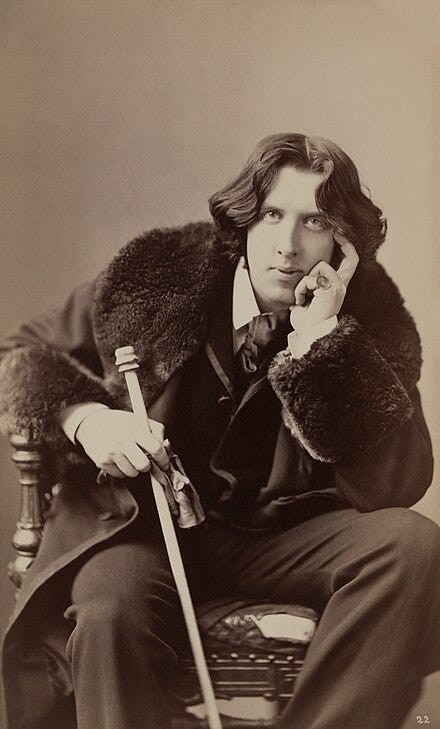
According to Wilde, art and beauty have meaning. Beauty is not trying to convey anything. It’s not moral, and it’s not didactic.
Would Wilde agree with me that to lack style is to lack something more significant? I think so. Style connects our person to our self, and ultimately results in the most authentic presentation of selfhood.
And let’s be honest, the allure of being a well-put-together woman is always going to be there. It’s a draw so strong I’m not even sure if I need to describe it.
Unfortunately, I’m horribly uncomfortable with the processes and procedures of being a well-put-together person. Getting my hair cut makes me anxious, so does getting my nails done, so does trying things on while shopping… and so on.
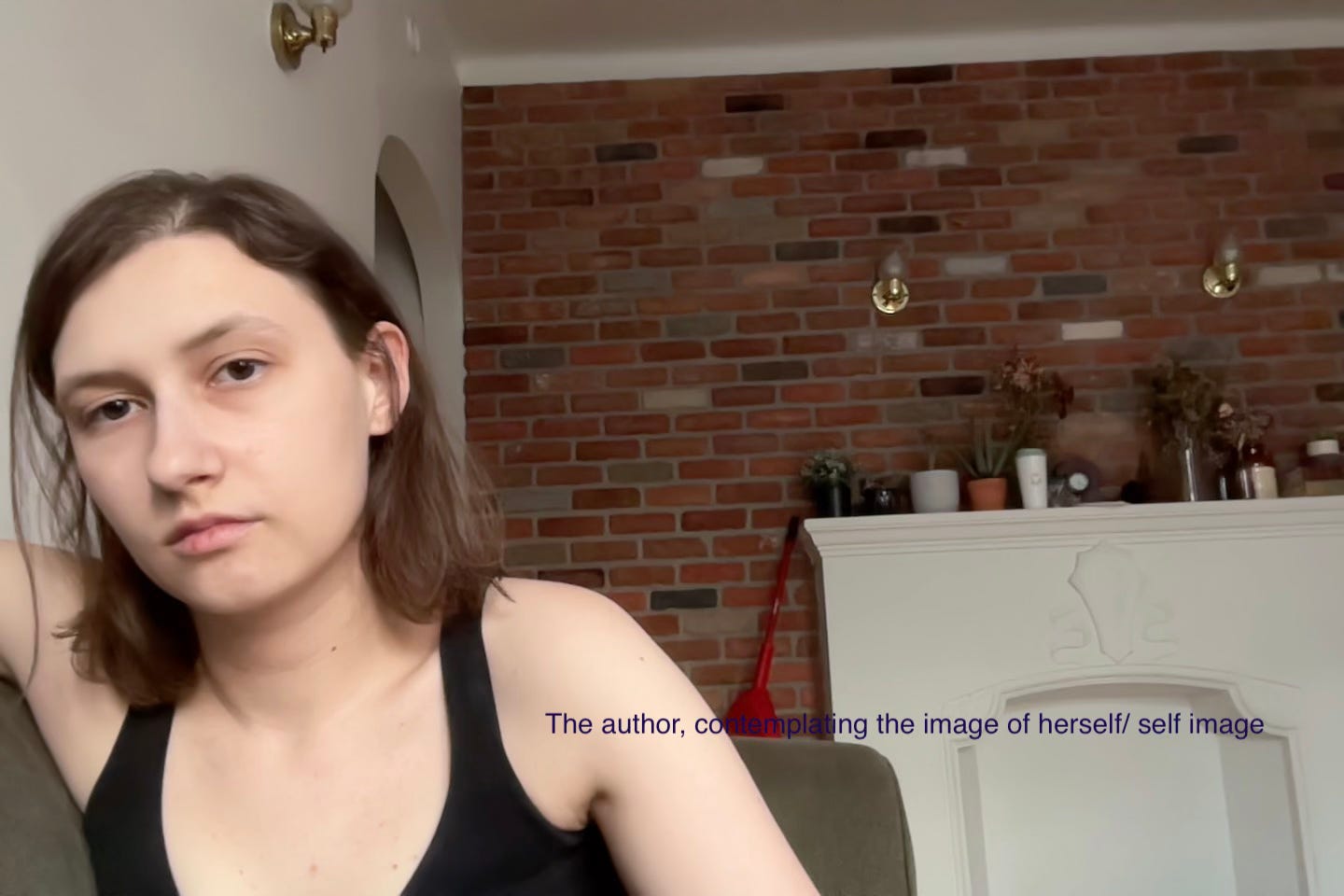
I realize now that feeling like myself extends out from the inside to the outside. I am myself all the time, but I only feel like it part of the time. I think that developing a good understanding of my self, my style, and my outward existence, is part of piecing myself together.
Do I feel like a person who is my self, or am I a person, and I have a self, depending on the context? I don’t really want to delve too far into ontological inquiry, but I think that question is part of my misunderstandings of my self.
I worry that many people, particularly men, would consider it a virtue to only focus on the interior self. “Oh, it’s so virtuous so sit inside and think in your own head, and be so far outside fashion and style and culture,” is what I imagine them to say. I disagree, and those ideas, that are very prevalent in a masculine society, is part of what I’m responding to here.
I also want to note that I feel sure that many people, particularly women, feel that no matter what or when, they’ve been forced to be seen their entire lives. But I think it can be equally as jarring to feel like you’re not being watched, and then wake up one day and realize you’ve been seen all along.
I ask myself, with bafflement: Why did I not bring a dress that day? Why did I not do my hair done for senior prom and let it lie flat upon my head? Why do I stubbornly insist on wearing clothes that don’t fit and I know make me look bad?
This is the best answer I have come up with so far. That it’s not only okay to have style, because you’re going to be seen, but should we? Must we? As for now, I say yes! Let’s.